Neighbourhood picks
Sofia Metro Guide for Tourists: How to Get Around the City
Sofia's two-line metro system connects the airport to the centre and major sights in under 30 minutes, making it the fastest and cheapest way to explore Bulgaria's capital.
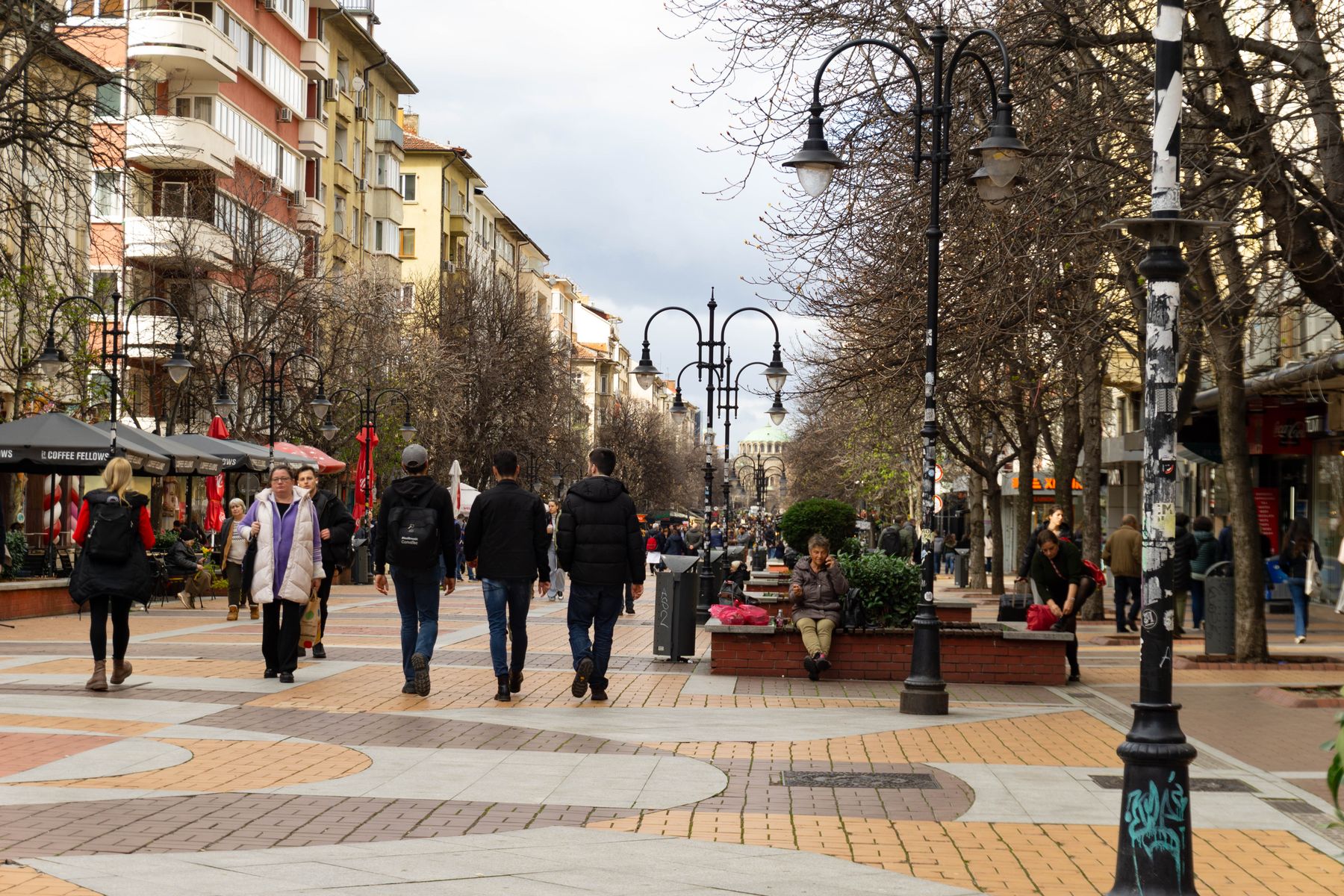
Why the Sofia Metro beats taxis and buses for visitors
The Sofia Metro runs punctually every three to seven minutes during the day and costs just 1.60 BGN per ride—roughly 80 euro cents. Compare that to a taxi from the airport to the city centre, which will set you back 15 to 25 BGN depending on traffic and how well you negotiate, or a bus that crawls through Tsarigradsko Shose Boulevard for forty minutes when you could be drinking a beer in a Vitosha Boulevard café. Line M2, the red line, connects Sofia Airport Terminal 2 directly to Serdika station in the absolute heart of the city in eighteen minutes flat. No other European capital offers such a seamless, affordable link from runway to room. If you book a hotel near Serdika, NDK or Sofia University stations, you'll step off the plane and be showering in your room before most travellers have found a taxi rank.
The metro also shields you from Sofia's unpredictable surface traffic. Tsarigradsko Shose, Graf Ignatiev Street and Maria Luiza Boulevard clog badly between eight and ten in the morning and five to seven in the evening. Buses and trams get stuck; the metro sails underneath. Line M1, the blue line, and Line M2 cross at Serdika, so switching between them takes thirty seconds. The stations are clean, well-lit and patrolled, with digital countdown boards in Bulgarian and English. Pickpocketing is rare but not unknown; keep your bag zipped on crowded evening trains. The real win is predictability: if your hotel checkout is at noon and your flight is at three, you can walk to the nearest metro station at half past eleven, reach the airport at ten to twelve, and still have time to browse the duty-free.
Line M2 from the airport: your first fifteen minutes in Sofia
After you land at Sofia Airport and clear passport control, follow the blue metro signs in Terminal 2. The station entrance sits at the far end of the arrivals hall; you cannot miss it. Buy a single-journey ticket from the ticket office or the purple vending machines, which accept coins, banknotes and contactless cards. A one-way fare is 1.60 BGN; a day pass costs 4 BGN and is worth it if you plan two or more trips. Validate your paper ticket at the orange readers before you descend to the platform. Line M2 trains toward Vitosha depart every six to ten minutes from around half past five in the morning until midnight. The journey to Serdika takes eighteen minutes and makes nine stops, including Tsarigradsko Shose for the National Palace of Culture area, James Bourchier for the South Park hotels, and NDK for the central concert hall and shopping district.
If your hotel is near Vasil Levski Stadium, Joliot-Curie or the university quarter, ride M2 to Serdika and change to the M1 blue line toward Mladost or Business Park. Serdika is the only interchange station in the system and lies beneath Sveta Nedelya Square, within two hundred metres of the Rotunda of Saint George, the Sheraton, and a dozen good restaurants on Vitosha Boulevard. Exit through the Sveta Nedelya or Patriarch Evtimiy exits depending on which side of the square your hotel sits. The stairs and escalators are clearly marked. Most hotels around the centre—near Graf Ignatiev, Rakovski Street or Patriarch Evtimiy Boulevard—are a five- to twelve-minute walk from Serdika station. I would book a hotel within that walking radius and save the taxi money for a proper dinner at Hadjidraganov's Cellars or Made in Home.
Line M1 for museums, parks and the east-side neighbourhoods
The blue Line M1 stretches from Slivnitsa in the west, through the city centre at Serdika, and out to Business Park Sofia in the east. It serves Sofia University, the Vasil Levski National Stadium, the Battenberg Mausoleum, and the Borisova Gradina park. If you stay in the Lozenets neighbourhood—popular for its leafy streets, café culture and mid-range hotels—you will use Joliot-Curie or James Bourchier stations on the M2 red line, but to reach the National Art Gallery, the Ivan Vazov theatre or the Russian Church, you will ride M1 westbound to Serdika and walk north up Tsar Osvoboditel Boulevard. The entire blue line takes thirty-five minutes end to end, so even if you accidentally board in the wrong direction you have lost only a quarter of an hour and 1.60 BGN.
Mladost and Business Park stations sit at the eastern fringe of the city and mainly serve office towers and residential blocks, but they are useful if you have business meetings or stay in one of the airport-area business hotels. The best sightseeing stops on M1 are Serdika, Serdika II which is a separate platform cluster underneath different streets and confusingly named, Sofia University for the central campus and bookshops, and Vitosha for quick access to the Saturday antique market on Alexander Nevsky Square. Exit Serdika or Sofia University and you are thirty seconds from a dozen cafés where a double espresso costs 2 BGN and a banitsa pastry another 1.50 BGN. The metro stations themselves have kiosks selling water, snacks and SIM cards, handy if you land late and everything above ground is shut.
Tickets, passes and how not to get fined
Sofia's ticket inspectors wear navy uniforms with a badge and they board trains without warning. The fine for travelling without a valid, validated ticket is 20 BGN on the spot or 50 BGN if you pay later at a municipal office. Inspectors are polite but unmoved by tourist confusion; you will pay. A single-journey ticket costs 1.60 BGN and is valid for one continuous trip including one transfer between M1 and M2. Once you exit through the ticket barriers, the ticket is spent. A one-day unlimited pass is 4 BGN, a three-day pass 10 BGN, and a weekly pass 16 BGN, all of which also cover trams and buses within the city limits. If you are staying four or more days and plan to visit Boyana Church on the city's southern edge or the Central Market Hall near Maria Luiza Boulevard, the weekly pass pays for itself quickly.
You must validate paper tickets at the orange or yellow card-readers before descending to the platform. Day and multi-day passes need validation only on first use; the machine prints the start date and time. Keep your ticket until you leave the paid area; barriers at some exits check it again. If you lose your validated pass mid-week, you must buy a new one—there are no replacements. The vending machines display instructions in English, German and Russian. Payment by contactless bank card is reliable, but the machines sometimes reject worn banknotes. If a machine malfunctions, join the queue at the ticket office; station staff speak workable English and can issue any pass type. I have never waited longer than five minutes even at Serdika during rush hour.
Metro hours, frequency and what to do when it closes
Trains on both lines start rolling around five-thirty in the morning and stop just after midnight. Exact times vary slightly by station, but the first train reaches Serdika from the airport at about six and the last train leaves Serdika for the airport at half past eleven at night. Service frequency is every three to four minutes during weekday morning and evening peaks, every five to seven minutes during midday and early evening, and every ten minutes after nine at night. Sundays and public holidays run on a reduced timetable with trains every eight to twelve minutes. Real-time countdown boards on every platform tell you when the next two trains will arrive. If a train is delayed or canceled—rare but not impossible—an announcement plays in Bulgarian and English.
If you land after midnight or your flight departs before six in the morning, the metro will not help you. Bus 84 runs between the airport and the city centre around the clock, but it takes fifty minutes and stops frequently. A taxi from the airport to central Sofia costs 15 to 20 BGN if you use an official rank or the OK Supertrans or Yellow Taxi companies; unlicensed drivers will ask 40 BGN and argue. I would book a hotel near Serdika or NDK stations and plan my flights to land before eleven-thirty at night, which lets me take the last metro into town, drop my bag, and still find a restaurant open on Vitosha Boulevard. Most evening trains are quiet, and I have never felt unsafe, though I keep my phone in a front pocket and my wallet in an inside jacket pocket after ten.
Which metro station to choose for your hotel
Serdika station puts you within a five-minute walk of Vitosha Boulevard, the Presidency, Sveta Nedelya Cathedral, the Roman ruins under the Serdika metro complex itself, and thirty or more hotels ranging from budget hostels to five-star properties. Booking a room near Serdika means you can walk to the Archaeological Museum, the Central Market Hall, the Banya Bashi Mosque and the Mineral Baths in under fifteen minutes, and you are two stops from the National Palace of Culture on the red line or three stops from Sofia University on the blue line. This is where I book every time: maximum sightseeing, maximum restaurant choice, minimum transport time. Patriarch Evtimiy Boulevard and Rakovski Street both run south from Serdika and are lined with mid-range hotels that offer clean rooms, breakfast and fast Wi-Fi for 70 to 120 BGN a night in spring or autumn.
If you want a quieter base with parks and cafés, choose a hotel near NDK or James Bourchier stations on the red line. The National Palace of Culture park sprawls green and peaceful behind NDK station, and Lozenets and Yavorov neighbourhoods nearby host wine bars, brunch spots and boutique hotels. You are still only four stops and six minutes from Serdika. Sofia University station on the blue line suits you if you have business at the university, medical appointments at Pirogov Hospital, or simply prefer the residential streets around Doktor's Garden and Oborishte. The trade-off is fewer restaurants within two blocks, but the metro frequency means you reach the centre in three minutes anyway. I would skip hotels near the outer termini—Slivnitsa, Mladost, Business Park—because the time saved on cheaper rates you will spend riding the metro twice a day, and Sofia's best food, history and nightlife all cluster within a ten-minute walk of Serdika.
Questions, answered
Can I use a contactless bank card directly on Sofia Metro gates?
No. Sofia Metro does not yet support tap-to-enter payment. You must buy a paper ticket or pass from a vending machine or ticket office before you board. The machines do accept contactless payment to purchase tickets, but the ticket barriers themselves require a validated paper or card ticket to open.
Is the Sofia Metro safe for solo travellers at night?
Yes. The stations are well-lit, patrolled by security staff, and covered by CCTV. Trains after ten at night carry fewer passengers but remain safe. Keep bags zipped and wallets secure as you would in any city. Avoid empty carriages if you feel uneasy; move to one with other passengers.
Which metro stop is closest to Alexander Nevsky Cathedral?
Sofia University station on the blue M1 line is the nearest, about a ten-minute walk northeast along Vasil Levski Boulevard. Alternatively, take M2 to Serdika, exit toward Patriarch Evtimiy Boulevard, and walk east for twelve minutes up Tsar Osvoboditel Boulevard. Both routes are flat and clearly signposted.
Do I need to validate my metro ticket every time I ride?
Single-journey tickets must be validated each time you buy one, before descending to the platform. Multi-day passes require validation only on first use; the machine stamps the start date and time. After that, simply show the pass to inspectors if asked. Do not throw away any ticket until you exit the metro system completely.
Can I take luggage on the Sofia Metro from the airport?
Yes. There are no size or weight restrictions, and most trains have space near the doors for suitcases. Avoid peak commuter hours—eight to nine-thirty in the morning and five to six-thirty in the evening—when trains are crowded. Mid-morning or early afternoon trains offer plenty of room for bags, and the journey from the airport to Serdika takes only eighteen minutes.
Doing good is the business: every booking through Stay Sofia funds one verified tonne of carbon removal — same room, same price, no markup.
Start your search